Laurie Miller, Senior Manager for Lands and Membership at Six Nations of the Grand River, has always been driven by a passion to help others. Born and raised in her home community in southern Ontario, she began working for the Six Nations Elected Council in 1992, fresh out of college with a goal to pursue her dream of becoming a lawyer. But life had other plans, and she found her path through service, working for decades in social service sector that involve the family law court system which brought a multitude of training such as mediation both mainstream and traditional approaches.
“I’ve always worked with people, trying to guide them as best I could,” Laurie shares. “I think that taught me a lot about listening, really listening and hearing what they say.” It was that same strength, her compassion and sense of justice, that led her to the world of lands management when her predecessor, Jan Burning, encouraged her to apply for the role of Lands Manager. “I said, ‘Jan, I don’t know anything about land management!’” Laurie laughs. “But Jan said, ‘You’ll do good, just consider it.’”
When the job posting appeared, Laurie was ready for change. Feeling unchallenged in her current role, she applied, and succeeded. But with the new position came a new responsibility: enrollment in NALMA’s Professional Lands Management Certification Program (PLMCP). Without hesitation, she signed on. “I thought, ‘It shouldn’t be that bad,’” she says with a smile.
However, life’s challenges came swiftly. Just as she was starting her new role, Laurie’s mother became seriously ill and passed away that August. Only a week later, Laurie began the first PLMCP course. “I struggled emotionally during those university courses,” she says. “But I was honest with my instructors. I told them I might need to turn off my camera now and then to regroup.”
Despite the personal hardship, Laurie persevered. “Honestly, school is what helped me through. I buried myself in the work.” She worked closely with instructors and support staff to design a learning schedule that fit her life and allowed her to stay on track. The coursework itself, grounded in stewardship, environmental protection, water, land, and traditional ecological knowledge, deeply resonated with her. “I’ve always worked with a Two-Eyed Seeing approach,” she says. “This program reflected what I’ve believed and lived all along.”
Laurie describes the shift into lands management as natural. “I tell people all the time, this work isn’t all that different from what I did before. Instead of working with children and families, now I’m working with land and water. It’s still about protection, relationships, and legacy.”
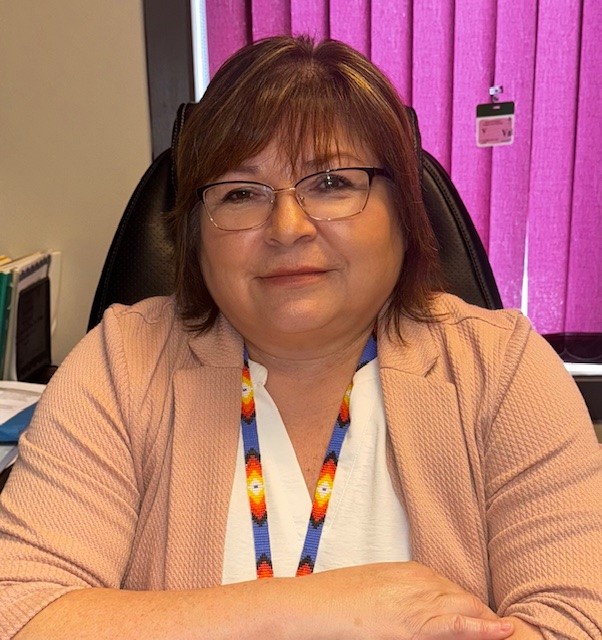
Laurie completed her Level I through Algoma University and Level II: Technical Training through NALMA. In October 2025, she will graduate during the Graduation Gala at NALMA’s 13th National Gathering. Reflecting on her journey, she shares, “It was meant to happen this way. I was ‘forced’ to go back to school, but now I know it was exactly what I needed. I love to learn. I love to give back to my community.”
Learning to Lead, Teaching to Empower
For Laurie Miller, the journey through NALMA’s Professional Lands Management Certification Program (PLMCP) has been more than professional development, it’s been a profound
transformation. Stepping into the role of Lands Manager at Six Nations of the Grand River with no prior background in land administration, Laurie admits she was “aghast” when she began to understand just how structured, technical, and critical land management is within First Nations communities across Canada.
“It opens your eyes. It changes how you see the land, how you listen to people, and how you carry knowledge forward.”
“It was an eye-opening experience,” Laurie says. “I had no idea how defined land management really is, how many layers, rules, and responsibilities are involved. I just kept taking it all in.”
What stood out most for Laurie was how vital education is to the work of a lands manager. Through the teachings of NALMA’s Master Instructor Debra Campbell, whom Laurie describes as “amazing”, she learned that one of the most important roles of a land manager is not just administrative or technical, but educational. “Debra always told us, your job will be constantly educating, your community members, your Chief and Council, your staff,” Laurie says. “And she was absolutely right.”
Armed with this understanding, Laurie has made it a priority to build awareness within her community. She keeps her course materials close by her desk and refers to them often when speaking with members who come to her with questions or concerns. “Sometimes I grab my book just to double-check, because I want to make sure I’m passing on what I’ve learned correctly,” she says. “I try to explain things clearly, because once people understand what really goes on in land management, they see it differently. They often say, ‘Ohhh, I didn’t know that.”
One of the biggest revelations for Laurie came in one of her very first year courses on “Indigenous Knowledge and Environmental Stewardship”. “I was looking for the enforcement section,” she recalls. “But it was tiny, because the real focus was education. Teaching the community how to live in harmony with the land, so they enforce it themselves. That approach really stayed with me.” She’s now working to bring that same spirit to Six Nations, encouraging respect for the land, water, and environment through outreach and understanding.
In her unique context at Six Nations, a community where 96% of the land is held under Certificate of Possession (CP) and only 4% is directly managed, Laurie has faced some especially complex challenges. “Six Nations is not like other communities,” she says. “We’re not a
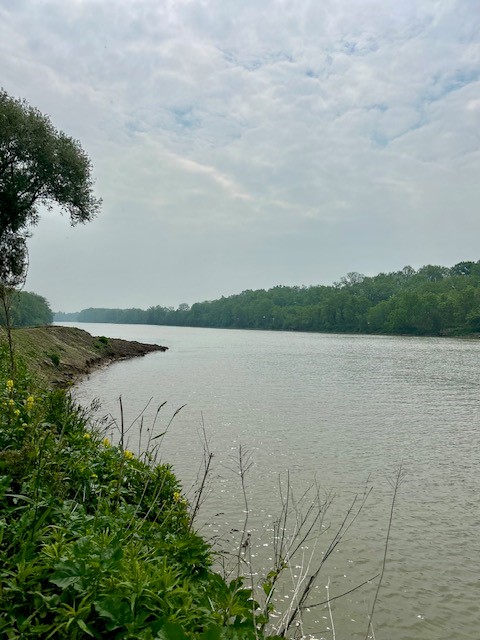
good fit for land code because of our population size and the way our land is already distributed. So, we have to work with what we’ve got and create change by educating people.”
That education has included many sessions with political leadership and the upper management of the administration. “I did an information session for Chief and Council on Section 18(2) Set-Asides,” she says, referring to a provision under the Indian Act. “Now Council can only support project ideas in principle, but they’re directed to us in the Lands Department to assess where and how a project can happen on community / band land. That’s how we’re building better processes, through knowledge.”
Throughout both Level I and Level II of the PLMCP Program, Laurie found each course built upon the last, strengthening her confidence and deepening her insight. “The training helped me realize that I already had the heart and instincts for this work. But the technical knowledge gave me the tools. Now I understand how to apply it specifically for our people, our land, our realities.”
“The biggest part of your job is educating the people and helping them understand why we do what we do.” – advice from Master Instructor Debra Campbell, echoed by Laurie Miller.
From Knowledge to Action, Grounded in Tradition
A key initiative sparked by her training is the creation of a Land Use Planning Committee, a solution designed to prevent proposals from bypassing the Lands Department and going directly to Chief and Council. “We developed guidelines, an application form, and even a resolution template,” Laurie explains. “Now, our Lands Department is the only one that can bring land files forward for recommendation. It ensures consistency, fairness, and proper review.”
The process is still evolving, and collaboration remains essential. Laurie is currently preparing to host a joint presentation with Alex Marques, NALMA’s Land Use Planning Specialist, to ensure that all committee members, from directors to council, are unified in their understanding of land use planning. “I never want to be put in a corner again, where someone says, ‘We already signed the funding agreement, you have to do this.’ That’s not how proper land management works.”
Laurie’s collaborative mindset is also evident in how the community structures its departments under a shared Nation Building sector. Environmental services, Justice, Lands, and Resources may all operate independently, but they meet monthly to stay aligned. “We know what each other are doing. That way, we help each other in the ways we need to, and it’s working. It’s a strong, integrated approach that’s tailored to our size and needs.”
But what truly sets Laurie apart is her ability to integrate traditional knowledge and storytelling into her daily work. She recounts a powerful moment when an Elder in her 90s visited the office to speak about her land, hoping to sell it back to the community. “She told us stories about the orchard, the soil, the well, the streams. We sat there listening. It moved us so deeply, we had to go walk the land ourselves. That history, those stories, have value. They belong in our records, in our decisions.”
Laurie envisions a future where this knowledge is digitized and mapped through GIS technology, creating a layered picture of every parcel that not only includes legal boundaries and land use data, but also captures the stories, memories, and ecological knowledge tied to the land. “I want us to be able to click on a parcel and learn who lived there, what the land was used for, what medicines grow there, the species at risk, the waters that flow through it, all of it. Our history, our knowledge, our science and traditional knowledge, together in one place.”
This vision reflects a Two-Eyed Seeing approach, where Indigenous knowledge and Western science are brought together to guide decision-making. For Laurie, it’s not just a philosophy, it’s who she is. “I see everything with two lenses: the technical and the spiritual. I believe even a blade of grass has a story. You just have to listen.”
Her approach also extends to how she interacts with community members. “People come in carrying emotion, anger, sadness, frustration. But I’ve learned not to focus on how it’s said, but on the message underneath. There’s always something important there. My job is to hear it, honour it, and respond in a good way.”
Whether she’s training others, writing policy, or walking the land, Laurie is living the values she hopes to instill, leading with knowledge, grounded in empathy, and always with deep respect for the land and people of Six Nations.
A Path Worth Taking
Reflecting on her journey through the Professional Lands Management Certification Program (PLMCP), Laurie offers heartfelt encouragement to others who may be considering the same path. “I would say take it, even if you don’t end up working in lands. The learning from it, you can take that knowledge and understanding wherever you go,” she says with conviction.
What began as an uncertain step turned into a defining experience. “I had no clue going into the PLMCP Program what it really was, but the very first course reeled me right in. It was the best forced decision I ever had,” she laughs, recalling how she was originally asked to take the training as part of her job.
But what started as an obligation became a personal and professional transformation.
Through the PLMCP Program, Laurie not only gained a deep understanding of land management systems and policy but also connected those frameworks to the lived realities and histories of her community. “You won’t regret taking the course,” she says. “It opens your eyes. It changes how you see the land, how you listen to people, and how you carry knowledge forward.”
Now a strong advocate for the program, Laurie continues to use what she’s learned to build systems, educate others, and protect the lands of Six Nations. Her message to future learners is simple but powerful: “Step into the program, you’ll gain tools, but more than that, you’ll gain perspective, confidence, and a voice.”
Laurie’s journey is a testament to the power of education rooted in both tradition and expertise. Her story reflects what the PLMCP program strives to achieve: strong, capable leaders who walk with their communities, honouring the past, navigating the present, and protecting the future. As she prepares to graduate at NALMA’s 13th National Gathering in October 2025, Laurie stands not only as a certified land manager, but as a voice of guidance, resilience, and renewal.